| TL;DR DIY corporate video in regulated industries creates legal, compliance, and reputational exposure that most leadership teams underestimate. Financial services, manufacturing, and healthcare firms in Toronto face specific regulatory requirements that amateur production routinely violates. The six risks outlined here – compliance failures, executive erosion, technical flaws, production safety, narrative weakness, and hidden costs – compound quickly. Professional production is not a marketing expense. For regulated enterprises, it is a risk mitigation strategy. This article is for informational purposes only and does not constitute legal, regulatory, or compliance advice. |
| In This Guide 1. Why Regulated Industries Cannot Afford DIY Video 2. Risk 1 – Compliance Failures (Financial Services, Manufacturing, Healthcare) 3. Risk 2 – Executive Authority and On-Camera Presence 4. Risk 3 – Technical Flaws That Signal Incompetence 5. Risk 4 – Safety and Legal Exposure During Production 6. Risk 5 – Brand Damage from an Unpolished Narrative 7. Risk 6 – Hidden Time and Opportunity Cost 8. When DIY Is Acceptable (and When It Is Not) 9. The Professional Alternative 10. FAQs |

Why a Quick iPhone Video Can Become a Legal Problem
Your Operations VP grabs an iPhone for a quick safety video. They walk the plant floor, record a few soundbites about the new assembly line, and post it to the company’s LinkedIn. Legal kills it by Day 3.
This scenario plays out regularly in Toronto’s financial services, manufacturing, and healthcare sectors. The intent is good – speed, authenticity, cost savings. The result is a permanent digital record of potential non-compliance.
In regulated industries, a video is never just a video. It is a surrogate for your organizational rigour. When a senior leader steps in front of a lens, the technical quality signals the quality of your internal controls. If the video looks unpolished, the assumption from analysts, auditors, and regulators is that your operations might be too.
This guide covers the six specific DIY corporate video risks that Toronto firms in regulated sectors face – and what professional production does to eliminate each one. If you are producing IR or investor-facing video specifically, see our companion guide to IR video strategy for Canadian public companies at shotonestudio.com/blog.
The DIY Video Risk Landscape for Regulated Enterprises
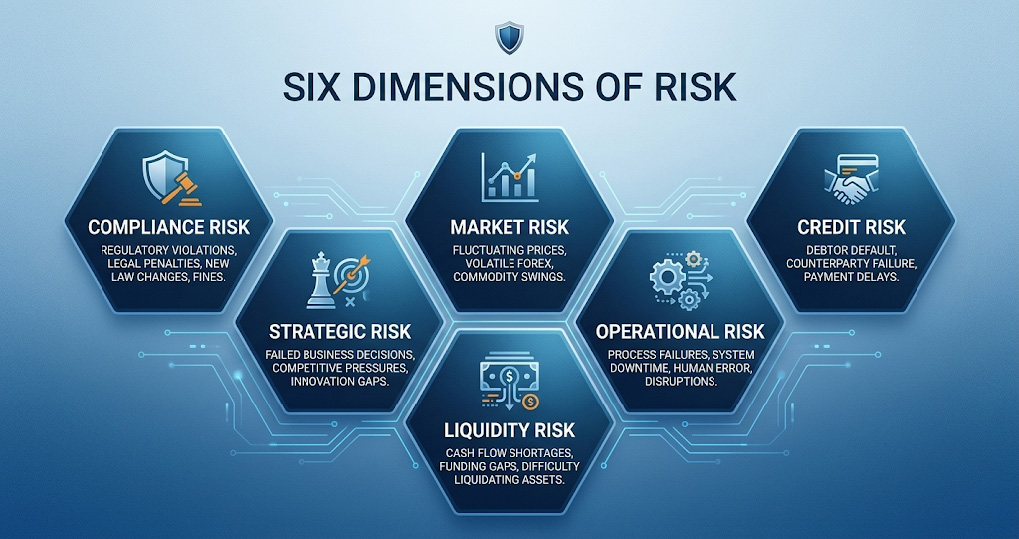
Professional video production is not a marketing expense for regulated businesses. It is a risk mitigation strategy. When production quality falls below your audience’s established expectations, the resulting brand damage can be difficult to reverse. The table below defines the six dimensions of DIY corporate video risk for Toronto’s regulated industries.
| Risk Dimension | What Happens | Institutional Consequence |
| Compliance Integrity | Inadvertent capture of non-public data or safety infractions | Regulatory scrutiny and legal retractions |
| Executive Authority | Technical flaws in eye contact and lighting diminish leadership presence | Erosion of investor confidence and perceived lack of rigour |
| Technical Standard | Visual banding and audio echo signal a cut-corners approach | Brand dilution among high-stakes stakeholders |
| Operational Liability | Unoriented crews filming in hazardous industrial environments | Documented safety violations and insurance exposure |
| Privacy Safeguards | Failure to obscure personal data visible in background frames | Regulatory audits and loss of patient or client trust |
| Resource Depletion | Internal teams diverted to technical troubleshooting and revision cycles | Opportunity cost and compounded legal review time |
Why Regulated Industries Cannot Afford DIY Corporate Video
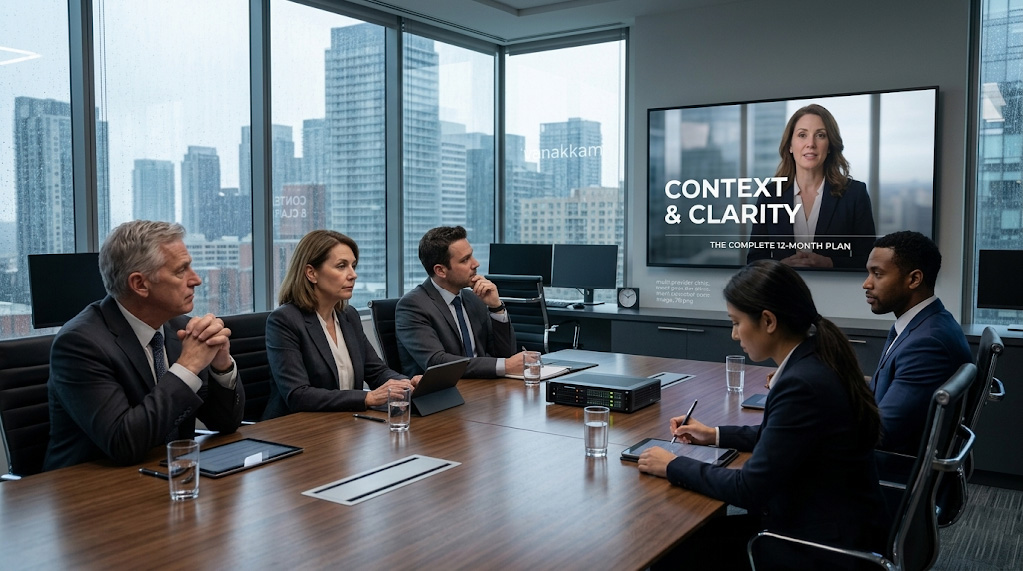
Video production in enterprise-scale organizations functions as a proxy for corporate excellence. Analysts and auditors treat the technical standards of public communications as a signal of the rigour behind internal quality management systems. When your content shows technical instability, it suggests a willingness to compromise on precision.
This is especially relevant in the Canadian market. The Canadian Investment Regulatory Organization (CIRO) and the Ontario Securities Commission (OSC) demand high levels of transparency and professionalism from public issuers. A low-production-quality video does not just look unprofessional – it raises questions about the standard your organization applies to everything else it produces.
Research in communication psychology consistently shows that non-verbal cues – eye contact, lighting quality, acoustic environment – affect how audiences perceive a speaker’s credibility and confidence. Poor lighting that creates harsh shadows, a hollow-sounding audio environment, or a presenter who appears to be reading notes rather than looking at the camera: each of these details registers subconsciously and shapes how investors and regulators interpret the message.
For TSX-listed firms in particular, the stakes are measurable. A video that reads as low-effort during earnings season or a market event can amplify analyst uncertainty rather than reduce it.
Risk 1: How DIY Video Creates Compliance Failures in Financial Services, Manufacturing, and Healthcare
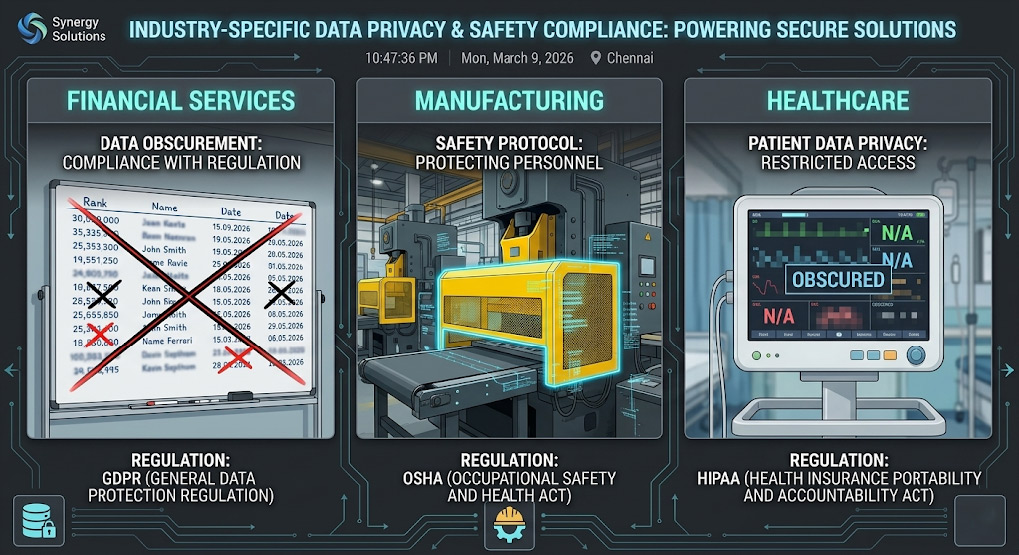
The most common compliance risk in DIY corporate video is the inadvertent capture of material that violates regulatory requirements. Non-experts focus on the foreground subject while professional teams audit the entire frame for background data leakage. These risks are usually far from where anyone is looking.
Financial Services: Selective Disclosure Under CIRO and NI 51-201
Canadian financial institutions must comply with National Policy 51-201 (Disclosure Standards), which governs the timely and non-selective disclosure of material information by TSX-listed issuers. This obligation applies to video content just as it applies to press releases and earnings calls.
Unscripted executive soundbites are a common exposure point. If a leader makes a comment that deviates from official press releases – even an improvised clarification – the organization may be required to make an immediate public disclosure to maintain a level playing field for investors. DIY videos filmed in corporate offices also routinely capture whiteboards containing internal projections, unreleased financials, or confidential strategic details in the background.
Professional crews conduct thorough site sweeps and use lenses that keep the background deliberately out of focus, so anything behind the subject becomes unreadable to the viewer. Scripts are reviewed for compliance with NI 51-201 before the camera rolls.
Manufacturing: OHSA Guarding and PPE Documentation
In manufacturing environments, a video intended to showcase a new facility can unintentionally document a safety violation. Ontario’s Occupational Health and Safety Act (OHSA) and Ontario Regulation 851 (Industrial Establishments) mandate specific guarding requirements for exposed moving parts. These requirements apply continuously – not just during formal inspections.
A camera that captures a machine operating without its required guard, even momentarily in the background, creates permanent, discoverable evidence of non-compliance. This can trigger Ministry of Labour inspections, financial penalties, and insurance liability increases. Professional production teams follow a strict Safe Shot Protocol: filming pauses any time a machine is not in its fully guarded state, and every visible worker’s PPE is verified before the camera rolls.
Healthcare: PHIPA and PIPEDA Visual Privacy Requirements
Healthcare and medical education videos in Ontario are subject to the Personal Health Information Protection Act (PHIPA), which governs the collection and use of patient health information. The federal Personal Information Protection and Electronic Documents Act (PIPEDA) provides additional protection for personal data in a healthcare context.
A common DIY failure is the capture of identifiable patient data on visible monitors or charts left open in a clinical background. A smartphone camera keeps everything in the frame in sharp focus – the subject, the background, and anything on a screen behind them. A professional crew uses lenses and framing techniques that deliberately blur the background, keeping only the intended subject in focus. Breaches of PHIPA can trigger regulatory audits and lasting damage to patient trust.
| Industry | DIY Trap | Professional Fix |
| Financial Services | Background data leakage (whiteboards, screens, open documents) | Comprehensive site sweeps and shallow-focus optics to keep backgrounds unreadable |
| Manufacturing | Unguarded machines or missing PPE captured on camera | Site-certified crews following OHSA-aligned Safe Shot Protocol |
| Healthcare | Patient identifiers visible on monitors or charts in clinical backgrounds | Professional set dressing and depth-of-field control to isolate the subject |
Risk 2: Why DIY Video Undermines Executive Authority
The credibility of your senior leadership is one of your organization’s most valuable assets during investor updates, analyst briefings, and town halls. Technical flaws in amateur video erode that credibility in ways that are subtle but immediately recognized by sophisticated audiences.
Why Does Eye Contact Matter So Much in Executive Video?
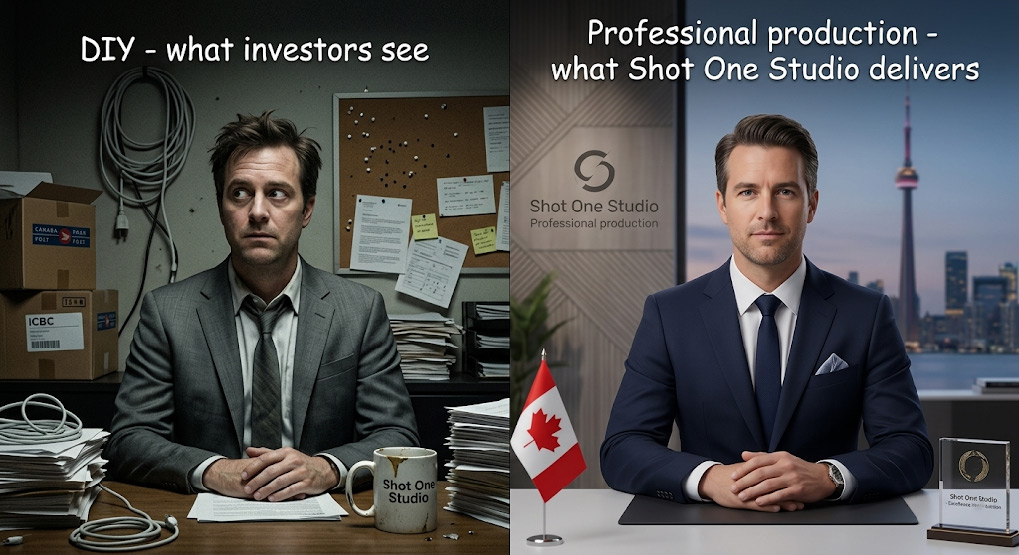
Eye contact is the primary signal of engagement and trustworthiness in on-camera communication. In self-filmed videos, executives typically look at their own image on the screen rather than the camera lens. This creates the visual impression of downcast or distracted eyes – the viewer perceives disengagement rather than confidence. Professional directors manage gaze depth to ensure your executive connects directly with the viewer through the lens.
How Does Poor Lighting Affect Investor Perception?
Overhead office fluorescents create a flat, washed-out look that makes speakers appear fatigued and lacking in authority. Filming against a window turns your executive into a silhouette, eliminating the facial expressions essential for non-verbal communication. Modern open-plan offices with hard surfaces and high ceilings generate significant reverberation – the resulting hollow audio quality signals a lack of professional preparation to anyone listening.
Three-point institutional lighting, a controlled acoustic environment, and a teleprompter for direct lens engagement are not film-industry luxuries. For a TSX-listed firm communicating during a volatile market period, they are the minimum required to maintain investor confidence in leadership.
| Issue | DIY Symptom | Professional Standard |
| Eye Contact | Gaze directed at the screen or notes | Gaze directed at the optical centre of the lens |
| Lighting | Flat or backlit; deep under-eye shadows | Three-point institutional lighting |
| Audio | Hollow echo; high ambient noise floor | Controlled reverb; clean vocal track |
| Framing | Too much empty space above head; slouched posture | Subject properly placed in frame; confident, open posture |
Risk 3: Technical Flaws That Signal Poor Operational Standards
Technical quality in corporate video is not about vanity – it signals a commitment to precision. In manufacturing and engineering environments especially, technical failures in a video are read as a lack of attention to detail. That perception bleeds directly into how stakeholders view your core operations.
What Causes Visual Banding and Why Does It Damage Brand Authority?
Consumer-grade cameras produce video that is prone to visible banding – ugly horizontal strips of colour that appear in gradients like a clear sky or a corporate-branded backdrop. You have seen this on a badly produced corporate video: the background looks like it has been painted in uneven layers rather than a smooth, solid colour. For a brand built on engineering excellence, these visual artifacts tell the viewer that your standards slipped somewhere. Professional production prevents this entirely, rendering your brand colours and skin tones accurately in every viewing environment.
Why Is Audio Quality More Important Than Picture Quality in Regulated Video?
Research in media psychology consistently shows that audio quality affects perceived credibility more than picture quality. If a viewer cannot clearly hear an executive due to background HVAC hum, open-plan office noise, or room echo, they disengage. For complex financial presentations or clinical training content, poor audio does not just frustrate viewers – it undermines the authority of the information itself. Professional production environments are acoustically treated to isolate the speaker’s voice as the primary focus.
| Parameter | DIY / Consumer Standard | Institutional Standard |
| Color Fidelity | Prone to visible banding – ugly colour strips on branded backdrops | Smooth, accurate colour across all backgrounds and formats |
| Audio Clarity | High room echo and ambient noise floor | Controlled reverb; clean, isolated dialogue |
| Frame Stability | Handheld shake or jittery movement | Cinematic stabilisation and intentional motion |
| Brand Accuracy | Colors shift and distort under compression | Exact brand color preservation across all formats |
Risk 4: Safety and Legal Exposure During DIY Production on Regulated Sites
In manufacturing and heavy industry, the production process itself creates liability – not just the final video. Internal marketing teams typically lack site-specific safety knowledge required to navigate high-risk environments, and this creates legal exposure before a single frame is published.
What Happens When an Unoriented Crew Films on the Plant Floor?
A common pattern is an internal team member stepping onto the plant floor to grab a quick shot without completing a formal safety orientation – and without wearing the required PPE. Beyond the immediate physical danger, this creates a situation where your organization is filming its own non-compliance. Under Ontario’s OHSA, employers have a duty to ensure that every person on the production floor meets all applicable safety requirements. Professional crews carry specialized production insurance, complete full site orientations before filming begins, and document their compliance.
Why Is the Machine Guarding Trap So Dangerous?
Ontario Regulation 851 requires barrier guards to protect workers from mechanical hazards at all times. A DIY crew, focused on getting the best angle, may request that a guard be temporarily removed for visual access. This constitutes a documented regulatory violation. If the video is ever reviewed during a Ministry of Labour audit, it becomes discoverable evidence of a safety breach. Professional production teams follow the Safe Shot Protocol and reposition or pause filming any time a machine is not in its fully guarded state.
Risk 5: Brand Damage from an Unstructured Narrative
Institutional audiences – analysts, procurement committees, senior clinicians – will not wait for a confusing video to find its point. If the message is not structured clearly from the first thirty seconds, they move on. Amateur video production regularly fails this test because it treats the script as an afterthought.
What Does a Weak Narrative Actually Look Like?
Picture this: a CFO films a quarterly update on their laptop. They share their screen to show a slide deck. The slides are dense with numbers – twelve data points per slide, text too small to read on a phone, no voiceover that walks through the logic. The CFO talks through it linearly, in the same order the slides were built, without ever framing what the key point is or why it matters. Investors who watch it learn nothing they could not have read in the press release – and many stop watching before it ends.
A professionally produced version of the same update uses three clear on-screen data points, built one at a time with simple animation, while the CFO speaks directly to camera and explains the significance of each one. The message is the same. The comprehension rate is not.
What Is the Cost of Inconsistent Video Across Departments?
When different teams produce their own content using different devices, lighting setups, and scripts with no shared standards, the result is a fragmented identity. A recruitment video that looks polished sitting next to a facility tour that looks like it was filmed on a phone sends a signal that your organization does not operate to a consistent standard. For TSX-listed firms, consistency of communication is an implicit expectation under continuous disclosure standards. Unified brand identity across video – consistent look, tone, and structure – signals that your organization applies the same standard everywhere.
Risk 6: The Hidden Time and Opportunity Cost of DIY Production
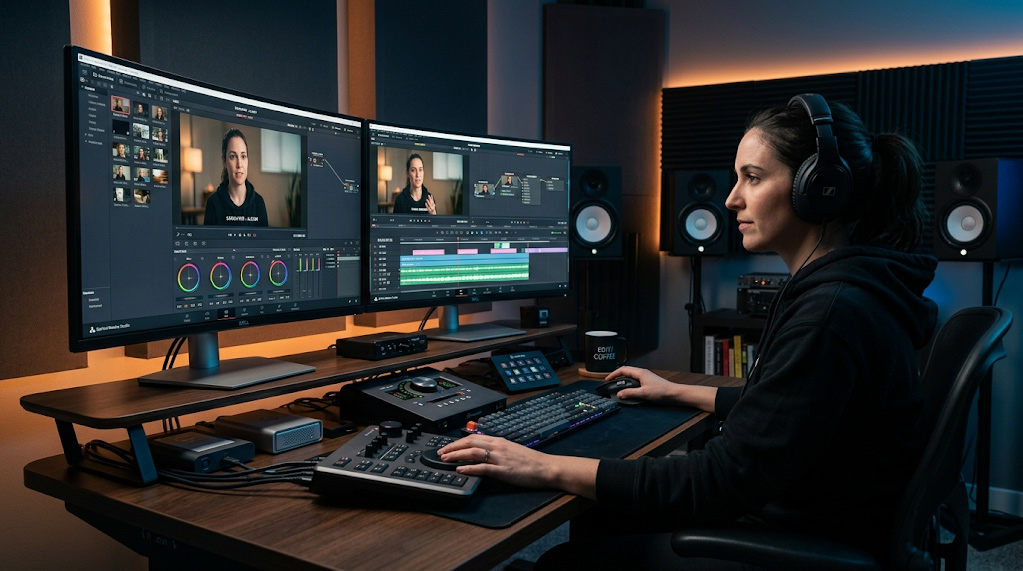
One of the most underestimated costs of DIY corporate video is the drain on internal team capacity. Organizations assume in-house production saves money – until an internal team spends significant time solving technical problems that a professional crew resolves before lunch.
What Is the Real Legal Review Burden of Unscripted Video?
In regulated industries, every piece of external content requires legal review. Unscripted or loosely structured amateur videos require substantially more time from your legal team to review and remediate than professionally pre-vetted content. When a senior associate spends hours correcting a non-compliant video – rewriting captions, reviewing background elements, checking disclosure language – the cost of that production has quietly multiplied. Professional production bakes compliance into pre-production: scripts are reviewed before a single frame is shot, reducing the legal review to a structured approval workflow rather than a full corrective cycle.
How Much Does Internal Video Production Actually Cost Your Team?
When a marketing or communications team diverts capacity to editing footage, those are working days they are not generating leads, supporting sales, or managing existing accounts. The perceived savings of DIY production are routinely offset by revision cycles, technical troubleshooting, and the compounded cost of legal corrections. A professional production partnership provides fixed-cost certainty and predictable timelines – both of which are critical for regulated enterprises with quarterly disclosure obligations.
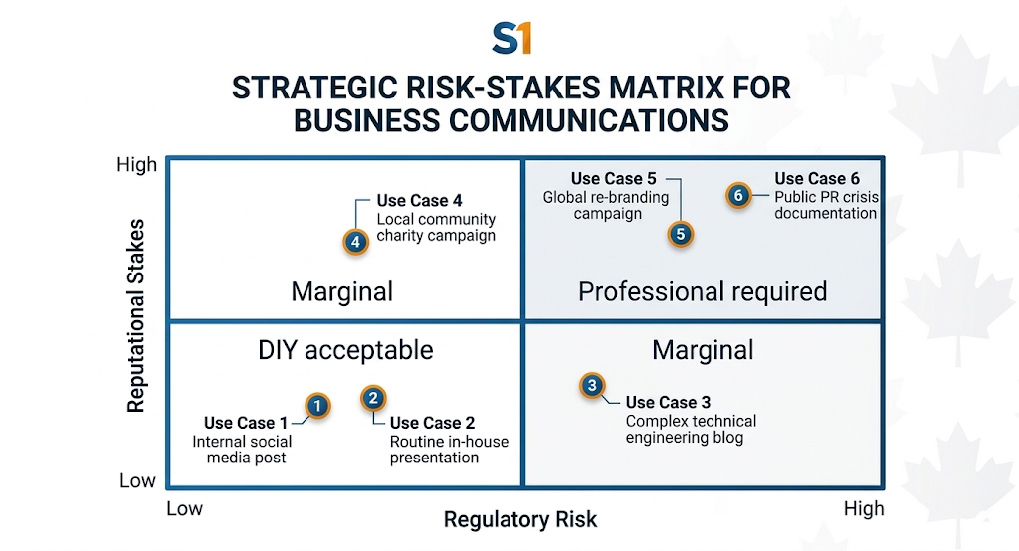
| Use Case | Pro? | Rationale |
| Quick social media story | No | Platform norms favour raw, behind-the-scenes content |
| Low-stakes internal team update | No | Authenticity appropriate; regulatory risk is minimal |
| Quarterly Earnings / IR Update | Yes | CIRO / NI 51-201 risk; production quality is a proxy for financial rigour |
| Manufacturing Facility Tour | Yes | OHSA liability; machine guarding and PPE documentation required |
| Healthcare Education / Training | Yes | PHIPA risk; clinical authority and patient privacy must be maintained |
| Executive Investor or Analyst Video | Yes | Analyst scrutiny; gravitas gap is immediately visible to sophisticated audiences |
The Professional Alternative: A Compliance-First Production Framework
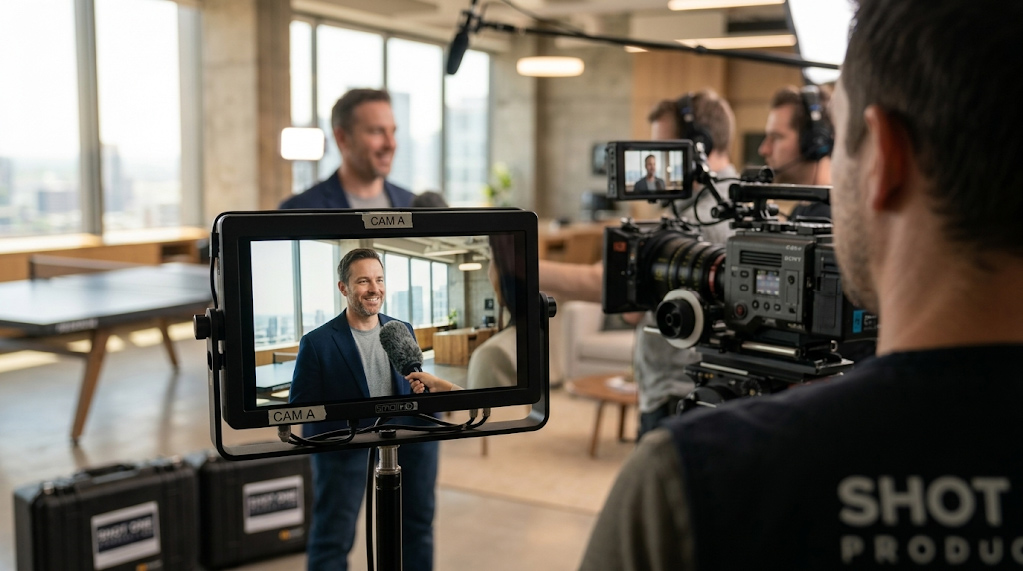
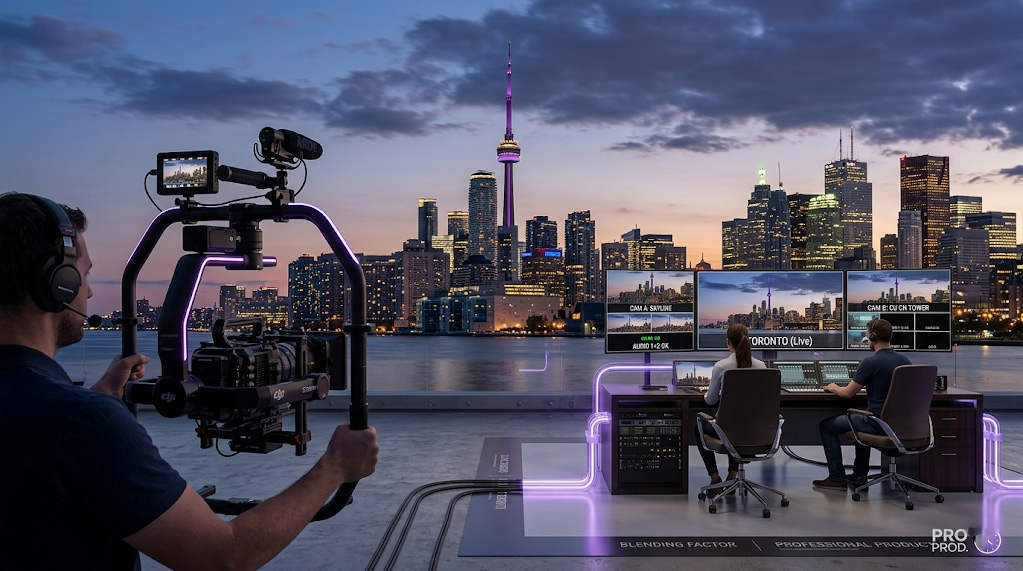
For regulated enterprises in Toronto, a professional production partnership provides a structured framework built to eliminate compliance and reputational risk before it reaches publication.
What Is Compliance-Parallel Pre-Production?
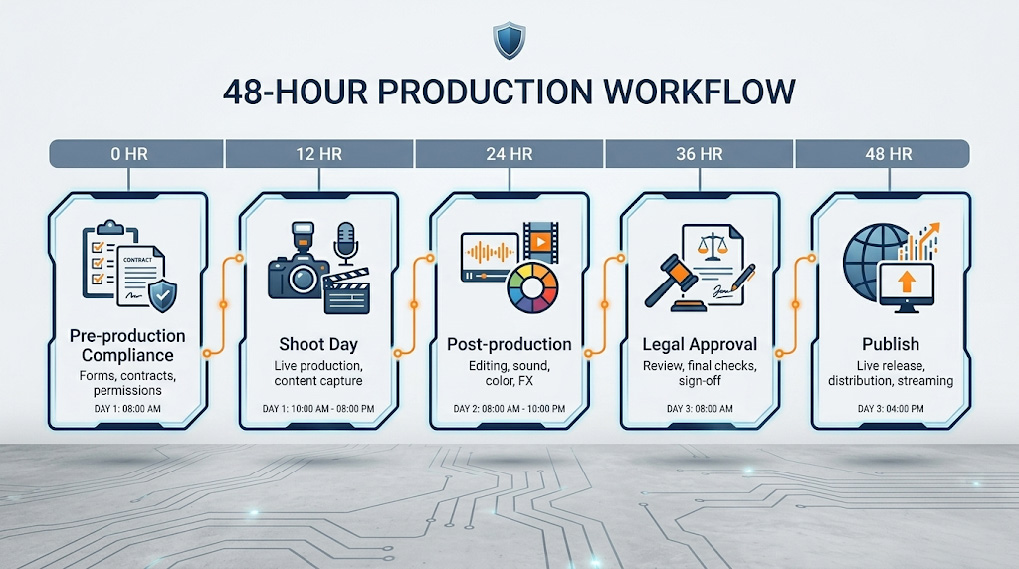
Unlike a DIY workflow where compliance is checked at the end, a professional process runs legal and compliance review in parallel with creative development. Scripts and storyboards are reviewed by your legal team before a single frame is recorded. Safety standards and privacy requirements are built into the production plan itself. This eliminates expensive post-production corrections and reduces the legal review cycle to a structured 48-hour approval workflow.
What Does Fixed-Cost Production Certainty Mean for Regulated Firms?
Professional agencies provide fixed-cost project certainty that internal teams cannot match. A project that enters revision cycles due to compliance flags quickly consumes the labor budget of entire departments – effectively paying for the content twice. Outsourcing to a specialist provides predictable production costs, a clean legal review process, and zero ambiguity about who is responsible for the final product.
A consistent template library also ensures brand coherence across all departmental videos – allowing your organization to deliver high-quality content at internal team speed but with the rigour of a specialized agency.
| Shot One Studio: Built for Toronto’s Regulated Enterprises Shot One Studio is Toronto’s specialized video production agency for high-stakes industries where technical quality is a compliance requirement, not a nice-to-have. With direct experience across advanced manufacturing, financial services, and healthcare, we understand the specific demands of OHSA compliance, CIRO disclosure standards, and PHIPA privacy requirements.Whether you need an executive IR update for a TSX-listed firm, a safety training series for a regulated facility, or a healthcare education video, Shot One brings an institutional mindset to every project. Book a call at shotonestudio.com/contact. |
The Risk Accumulates Faster Than the Savings
The decision to produce video internally is usually driven by a desire for speed. In regulated industries, the reputational and legal risks of DIY corporate video accumulate faster than the savings justify.
A single background data leak, an unguarded machine in the frame, a technically diminished executive, or an unscripted comment that triggers a disclosure obligation – each of these can initiate an expensive chain of legal and regulatory consequences that no marketing budget was designed to absorb.
Professional execution ensures your message reaches stakeholders with the clarity, compliance, and authority your regulated industry demands.
| Request our Regulated Video Compliance Checklist to audit your current media standards. Or book a call with our team to discuss your next regulated industry production.shotonestudio.com/contact |
NOTE FOR CMS: The ‘Regulated Video Compliance Checklist’ CTA above requires a live landing page or downloadable asset at shotonestudio.com before this article is published. If the asset is not yet live, replace the first CTA line with ‘Book a call to discuss your regulated industry video needs.’ and link to /contact.
Frequently Asked Questions
Is DIY video ever appropriate for financial services organizations?
Yes – low-stakes internal communications carry minimal regulatory risk. Any external-facing video, particularly executive updates, earnings communications, or investor-facing content, requires professional scripting, a compliance review, and a wire release process aligned with CIRO and NI 51-201 disclosure standards.
What is the most common technical failure in regulated industry corporate video?
Institutional viewers notice audio problems before they notice picture problems. Background noise, room echo, and a high ambient noise floor make complex financial and clinical content unwatchable for the audiences who matter most. The second most common failure is eye contact – when a presenter looks at their screen rather than the lens, the viewer perceives disengagement.
How does professional production manage safety on a manufacturing floor?
Professional crews complete full site orientations, wear the required PPE, and follow a Safe Shot Protocol aligned with Ontario’s OHSA and Ontario Regulation 851. Filming pauses any time a machine is not in its fully guarded state or a visible worker is out of compliance. All of this is documented.
Why does eye contact matter so much in executive video?
When a leader looks at their screen rather than the lens, it creates a psychological disconnect – the viewer perceives distraction or disengagement rather than confidence. In a market environment where investor trust is the primary currency, that signal is costly. Professional directors manage gaze depth to ensure direct optical connection with the audience.
What is the real cost of DIY video production in regulated industries?
The direct production cost is lower – but the total cost is not. When a legal team spends hours reviewing and correcting non-compliant content, the hourly cost of senior legal resources frequently exceeds the production savings. When a compliance failure triggers a regulatory inquiry or requires a retraction, the cost becomes substantial. Professional production provides fixed-cost certainty and eliminates the revision cycles that quietly consume internal budgets.
Pre-Publish Checklist
| Priority | Item | Action |
| Must | Legal disclaimer added at bottom of article | Add before publish |
| Must | Title tag trimmed to under 60 characters | Verify in CMS page settings |
| Must | Meta description trimmed to under 160 characters | Verify in Yoast / RankMath |
| Must | hreflang=”en-CA” in <head> | Signals Canadian English to Google |
| Must | External links to OHSA, PHIPA, PIPEDA, CIRO set to open in new tab | Confirm all 4 URLs are current |
| Do | Internal link to IR video blog post added in body | shotonestudio.com/blog/ir-video-strategy |
| Do | Featured image (1200x630px) uploaded with alt text | Use hero visual suggestion in this doc |
| Do | Open Graph tags set (og:title, og:description, og:image) | Required for social media previews |
| Do | Article + FAQPage schema in JSON-LD added to <head> | Enables Google rich results |
| Do | Reading time visible in byline (8 min read) | Add to author byline block |
| Do | Author bio block added (Shot One Studio Strategy Team) | Include at bottom of post |
| Good | Compliance Checklist CTA – confirm asset or landing page is live | Replace with /contact if asset not ready |
| Good | CIRO and regulatory names verified at source before publish | Regulatory names and URLs change |
| Good | Mobile layout tested at 375px viewport | Tables must scroll horizontally |
| Legal Disclaimer This article is provided for informational purposes only and does not constitute legal, regulatory, health and safety, or compliance advice. References to OHSA, Ontario Regulation 851, PHIPA, PIPEDA, CIRO, NI 51-201, and TSX requirements are provided as general context only. Regulatory requirements change. Always consult qualified legal counsel and your compliance team before implementing any video production or investor communications strategy. Shot One Studio is a video production company and is not a registered legal, securities, or regulatory advisor. |
© 2026 Shot One Studio. All rights reserved. shotonestudio.com