Quick answer
One video for every audience is not a video strategy. It is a compromise that works for nobody.
Launch video needs to be planned at the same time as the rest of the launch, not briefed after the budget is mostly spent.
You need different videos for buyers, for social media, for your sales team, and for the public. They are not the same asset.
Start briefing production eight to twelve weeks before launch. Less than that and quality, compliance, or asset count suffers.
This article is for informational purposes only and does not constitute legal, regulatory, or compliance advice.
A marketing director at a wide, uncluttered desk reviewing printed storyboard frames spread across the surface. One hand rests on the sheets; the other holds a pen mid-thought. A laptop sits open in the background, slightly out of focus. Warm directional light from a tall window casts a clean shadow across the desk. Shot from 45 degrees above. Alt: “Marketing director planning product launch video strategy Canada – storyboards on desk with natural light”
Who This Guide Is For
Marketing directors and brand managers at Canadian companies preparing for a product or service launch. Useful whether you are launching into a new market, introducing a new product line, or repositioning an existing one.
Why Video Always Gets Left to Last
Here is how most product launches go. The marketing team spends three months planning the strategy, the messaging, the campaign, the PR, the event, and the sales enablement. Then, four weeks before launch, someone asks about the video.
By that point, the budget is mostly allocated. The timeline is tight. The brief gets written in a hurry. The production company films whatever they can arrange in the time available. The video goes out looking fine but feeling generic, because it was built around what was left, not around what the launch actually needed.
This is not a production problem. It is a planning problem. And it is completely avoidable.
Video is not a deliverable you produce at the end of a launch plan. It is a communication tool that needs to be built into the plan from the beginning, because the best launch video does not just document the launch. It drives it.
The Four Stages of a Launch and What Video Does at Each One
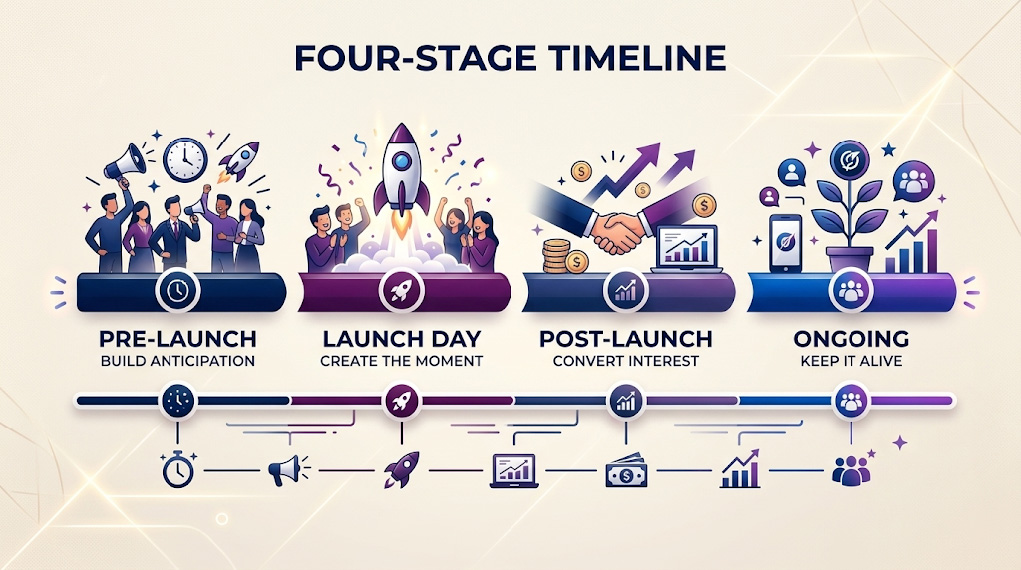
A product launch is not a single event. It is a sequence of stages, and video plays a different role at each one.
Premium editorial graphic: A horizontal four-stage timeline bar in Shot One Studio navy and white. Stages: ‘Pre-Launch’, ‘Launch Day’, ‘Post-Launch’, ‘Ongoing’. Descriptors: ‘Build anticipation’, ‘Create the moment’, ‘Convert interest’, ‘Keep it alive’. Thin progress line connects all four. White background. Alt: “Product launch video strategy four-stage timeline – pre-launch to ongoing content Canada”
Before the launch: build anticipation
The weeks before launch are the most underused window in most campaigns. A teaser video, a behind-the-scenes clip, or a short interview with someone involved in building the product can start conversations before the product is even available. These do not need to be polished productions. They need to create genuine curiosity.
For launches in professional markets, where your buyers are procurement managers, executives, or specialists, this is also the window to build credibility. A short video from someone your audience already respects, speaking about the problem your product solves, does more work than any press release.
Launch day: create the moment
The launch day video is the one most people think of when they think of launch video. It announces the product, sets the tone, and gives people something to share.
Common launch day videos underperform because they lead with features and internal language, rather than audience problems. They feel like a presentation, not a story. The launch day video that actually travels leads with the problem it solves and makes the audience feel something.
For publicly listed companies, the launch day announcement also has rules around what can be said and when. Any information that could affect your share price needs to go through the right disclosure channels at the same time the video goes out. Your legal team should review the script before filming.
After the launch: convert interest into action
Once the launch moment has passed, the work shifts from awareness to conversion. This is where most video strategies go quiet, and where most of the commercial opportunity sits.
The videos that drive conversion are usually the least glamorous ones: a detailed product walkthrough, a customer talking about a specific result they got, a comparison that helps a buyer make a decision. These videos do not need big production budgets. They need clarity and honesty.
This is also the stage where your sales team needs support. Short clips that address the most common questions and objections, organised so a rep can pull the right one up during a meeting, are often worth more than any external campaign video.
Ongoing: keep the product alive
A product launch is a beginning, not an end. The most successful launches maintain a video content rhythm for months afterward, with new customer stories, product updates, behind-the-scenes content, and educational pieces that position the company as a genuine authority in its space.
Most companies produce this content sporadically and reactively. The ones that plan it as part of the original launch strategy tend to maintain stronger audience engagement long after launch day than the ones that treat ongoing content as optional.
How Many Videos Does a Product Launch Actually Need?
The honest answer is: more than one, fewer than you fear.
A well-planned launch typically needs five distinct video assets. Each one has a specific job to do.
Supplement with UGC clips (e.g., customer unboxings for social) to boost engagement, per 2026 trends.
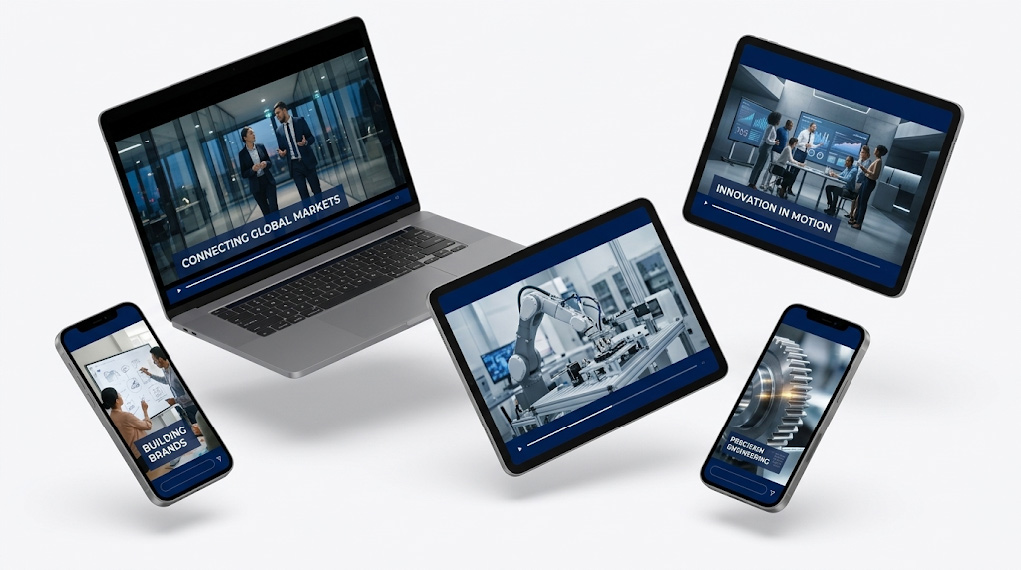
| Asset | Audience | Job | Length |
| Awareness video | General / social audiences | Make someone care enough to look further | 60 to 90 seconds |
| Product explainer | Buyers and decision-makers | Build confidence in how it works | 2 to 3 minutes |
| Credibility video | Fence-sitters and analysts | Provide proof from a real voice | 90 seconds to 2 min |
| Social clips | Platform-specific audiences | Drive traffic and conversation | 15 to 30 seconds |
| Internal sales version | Your sales team | Arm reps with consistent messaging | 3 to 5 minutes |
Five video asset cards in a clean horizontal row, each in native aspect ratio (16:9 for Awareness/Explainer, 1:1 for Social, etc.). Dark navy background, white labels, grey descriptors. Alt: “Product launch video asset suite – five formats five audiences Canada launch strategy”
The awareness video
This is the public-facing launch video, the one that goes on your website, LinkedIn, and YouTube. Its job is to make someone who has never heard of you understand what you do and why they should care. It runs 60 to 90 seconds. It leads with the problem, not the product.
The product explainer
This is for buyers who are already interested and want to understand how it works. It goes deeper than the awareness video, two to three minutes, focused on the specific details a decision-maker needs to feel confident.
The credibility video
A real customer, a respected specialist, or a recognisable figure speaking honestly about their experience with the product. This is your highest-credibility asset and the most likely to influence a buyer who is on the fence. It needs to feel genuine, which means it cannot be scripted or over-produced.
Social clips
Short clips cut from the longer assets, 15 to 30 seconds, built for the specific platform they will live on. LinkedIn, Instagram, and YouTube Shorts each have different aspect ratios, different audiences, and different viewing behaviours.
The internal sales version
A version of the product story built specifically for your sales team. It covers the key messages, the most common objections, and the competitive context.
The Most Common Planning Mistakes
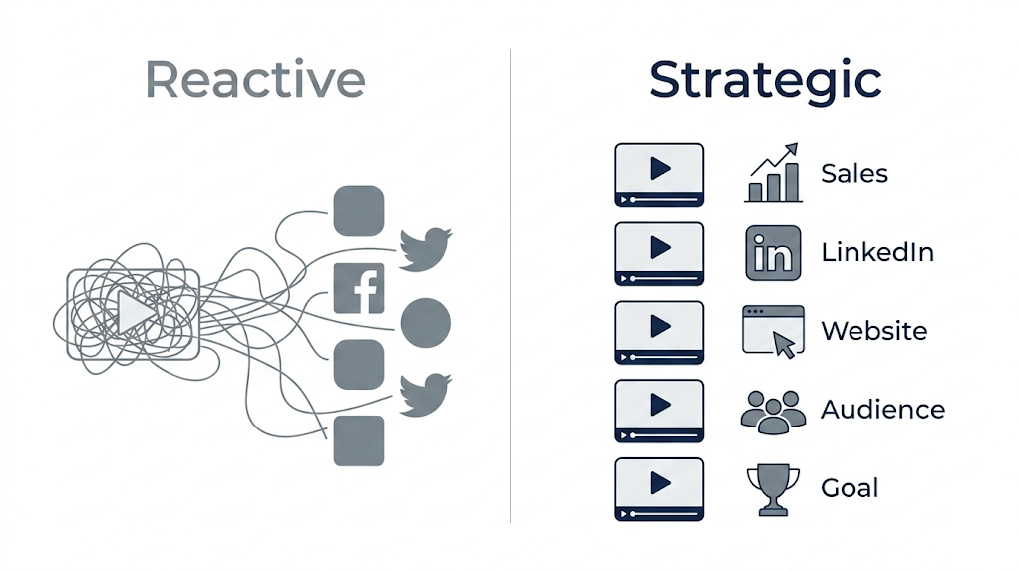
Briefing the production company too late
Eight to twelve weeks is the minimum from brief to finished assets for a launch suite. When a video gets briefed four weeks out, something has to give.
One video, every channel
A 90-second brand video built for your website will not perform on LinkedIn, will not satisfy a procurement manager who needs detail, and will not give your sales team anything they can use in a meeting.
Answering the wrong question
Most launch videos answer: what does this product do? The question your audience is actually asking is: will this solve my specific problem?
Forgetting the sales team
Your sales team is having hundreds of conversations about this product from the day it launches. If they do not have video assets that directly support those conversations, they are improvising.
Measuring the wrong things
View count is not a business result. Agree on success metrics that connect to commercial outcomes before production.
How to Brief a Production Team Early
The earlier you bring a production team into the launch planning process, the better the video will be.
A production team that is in the room when the launch strategy is being built can help answer key questions about audience, story angles, and feasibility.
Leverage AI for b-roll suggestions, auto-captioning, or voice cloning in multilingual launches (e.g., French for Quebec), while prioritizing human oversight for brand authenticity.
The four questions every brief must answer:
Who is watching? What do we want them to do after watching? Where will they watch it? What is the one thing we want them to remember?
What to Expect from a Professional Production Partner
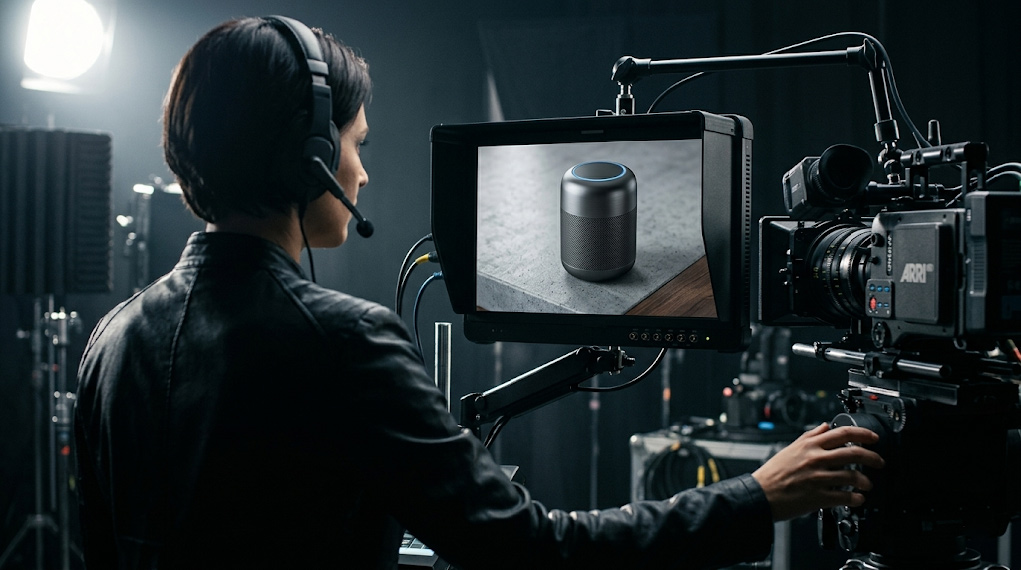
On-set production photo: View from behind the camera operator, lens in sharp foreground, executive subject in soft focus. Studio lights visible, branded navy backdrop. Alt: “Professional product launch video production Toronto – Shot One Studio executive announcement on set”
Strategic thinking before creative execution
The first conversation should be about your audience and your goals, not cameras and shot lists.
Honest advice about what will and will not work
A good partner tells you early if a concept, budget, or timeline won’t deliver.
Experience with your industry’s specific requirements
Regulated industries require partners who build compliance into the process from the start.
A clear process from brief to delivery
Script approval, revisions, filming, editing milestones—all agreed upfront.
| Use case | DIY? | Why |
| Behind-the-scenes social clip | No | Platform norms favour raw content |
| Awareness or brand video | Yes | First impressions demand polish |
| Product explainer for buyers | Yes | Production quality signals product quality |
| Credibility or customer story | Yes | Authenticity must match technical quality |
| Sales enablement suite | Yes | Consistency drives sales results |
The Short Version
Video planned last produces launch campaigns that feel like an afterthought. Video planning first produces launches that have a story, a momentum, and assets that keep working long after launch day.
Brief your production partner early. Build a suite of assets for the specific audiences who matter. Measure results in terms that connect to the commercial outcome of the launch.
Closing brand image: Wide, low-angle shot of an empty production set being struck—lights dimming, cables coiled. Mood: purposeful work done. Alt: “Shot One Studio video production team after shoot – product launch video production Canada”
Planning a product launch in Canada?
Shot One Studio helps marketing directors build launch video strategies that work, from first brief to final asset.

Frequently Asked Questions
- How far in advance should you start producing video for a product launch?
Eight to twelve weeks minimum from first brief to finished assets. That covers scripting, revisions, filming, editing, and review rounds. For regulated industries (healthcare, finance, pharmaceuticals), build in 4-6 additional weeks for legal/compliance script reviews before filming, verified with your counsel. Monitor CRTC’s 2026 Regulatory Plan for described video (2027 rollout) and discoverability tagging on streaming/social platforms. - How many videos does a product launch actually need?
Most launches need three to five videos, each for a different audience: awareness for general audiences, explainers for buyers, credibility from a real voice, social clips, and internal sales version. A single video cannot do all jobs. - What is the biggest video mistake companies make during a product launch?
Producing one video and putting it everywhere. It fails across channels, audiences, and goals. The second is starting production after other launch decisions, compressing timelines and budgets. - What makes a product launch video actually work?
It targets one specific audience, answers their real question (not yours), and lands on their preferred channel. A video doing all three outperforms bigger-budget alternatives. - How much does product launch video production cost in Canada?
It varies by assets and complexity: social shorts $2,500–$8,000; explainers $4,000–$20,000; full suites $45,000+. AI-generated clips start at $20/minute. Always get quotes, as poor video costs more to redo.
Legal Disclaimer
This article is provided for general informational purposes only and does not constitute legal, regulatory, or compliance advice. Shot One Studio is a video production company. All regulatory requirements (e.g., CRTC described video policies effective 2027) are illustrative; verify with qualified legal counsel.