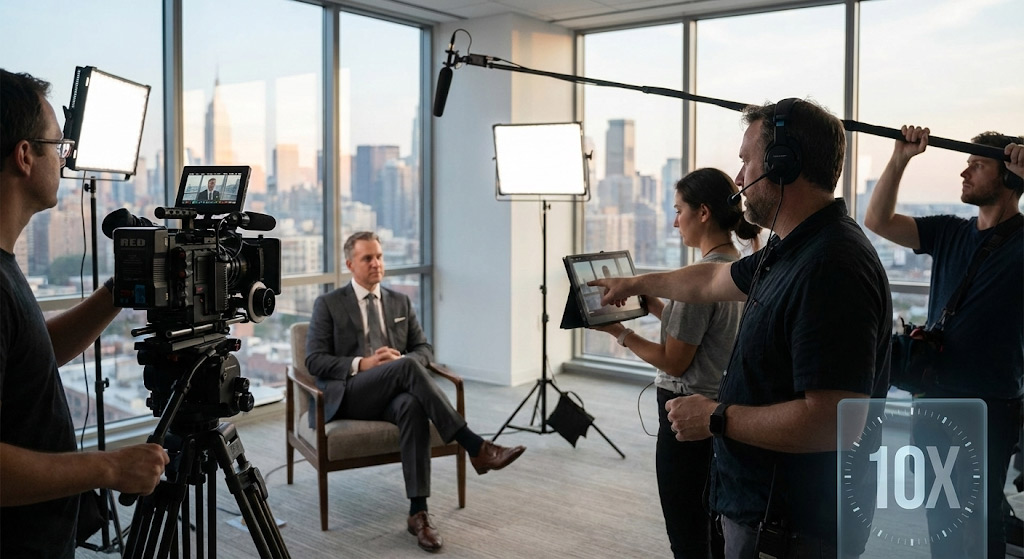
Most enterprise video fails not due to low quality, but due to strategic negligence. Failures stem from a “We need a video” tactical approach, ignoring customer pain points, overwhelming stakeholder feedback, and treating distribution as an afterthought.1
To fix this, enterprises must adopt a Distribution-First, Modular Content Strategy. This involves rigorous pre-production, which can prevent up to 45% budget overruns by establishing clear scope and workflow frameworks.4 Success relies on aligning stakeholders using tools like the RACI matrix, creating reusable content blocks, and measuring impact using conversion metrics and attributed revenue, not just vanity metrics like views.6
Part I: The Strategic Crisis: Diagnosing Enterprise Video Failures

Video content is a mandatory investment, but decision-makers—CMOs, Product Heads, and CTOs—are frequently frustrated by expensive projects that look impressive but deliver disappointing returns. The core disconnect is strategic negligence: organizations confuse production activity with marketing results.
The Financial Risk: How Much Does Poor Strategy Really Cost?
This failure has a direct financial cost. Evidence suggests companies without a documented marketing strategy waste an average of $847,000 annually on tactical activities that don’t align with business goals. Compounding this is Scope Creep, where late-stage, unmanaged internal feedback turns predictable investments into financial liabilities. Analysis shows this strategic neglect causes creative projects to exceed budgets by an average of 27% to 45%.

What Are the Core Mistakes Killing Enterprise Video ROI?
The inefficiency of enterprise video production stems from five consistent strategic flaws:
- The “We Need a Video” Trap (No Strategy): Videos are treated as a tactical checklist item rather than a project with a measurable objective (e.g., lead generation, reducing sales cycle time). Without a defined job in the funnel, the video has no chance of achieving a positive ROI.
- Talking About Yourself, Not Solving Problems: Enterprises consistently focus the narrative on company achievements or features. Viewers seek solutions to their specific problems, not technical specifications or corporate history, and will quickly disengage if the message isn’t immediately relevant.
- Stakeholder Paralysis: Complex corporate sign-off processes lead to “decision-by-committee” and endless revisions. Production quickly stalls when multiple internal teams are involved without a single, clearly designated Accountable decision-maker for the final cut.
- The “One Big Video” Mentality: Investing heavily in a single, fixed video asset is inefficient. This asset cannot be easily adapted for the distinct technical and audience requirements of different platforms (LinkedIn, TikTok, email), forcing content teams to restart the cycle constantly.
- Distribution as an Afterthought: This is the most damaging error. 95% of companies struggle with low content traction because distribution requirements—like vertical aspect ratios for social media or mandatory closed captions for mute viewing—are not planned from the very beginning, undermining content reach.
Part II: The Fix Framework: Building Content That Performs
Fix 1: Strategic Pre-Production & Scripting
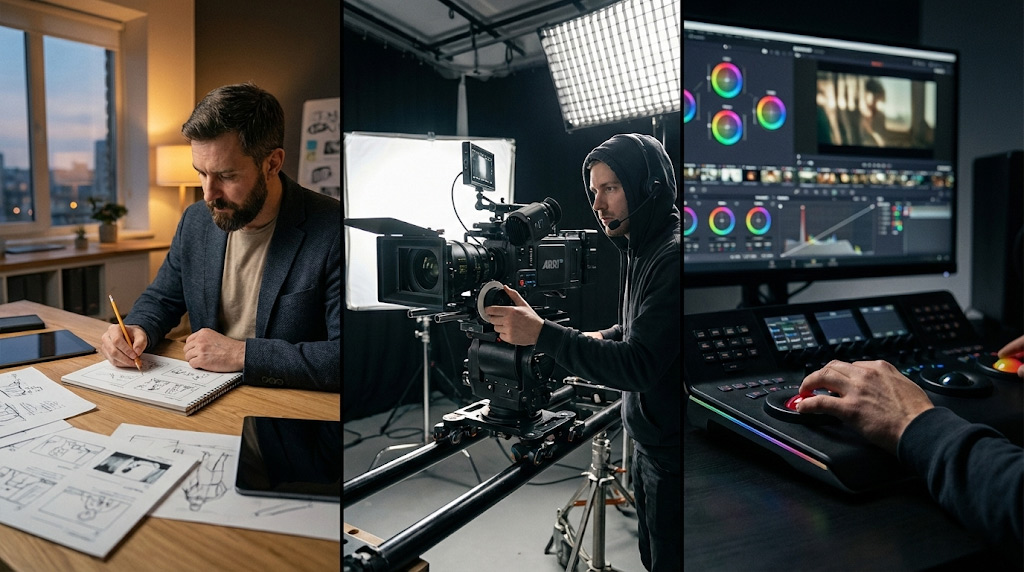
Rigorous pre-production is the most profitable phase, preventing up to 40% of budget waste by setting a clear scope. Every project must begin with a creative brief that defines a clear, measurable business objective (e.g., “Improve customer retention by 15%”).
The scripting process must prioritize the viewer. Use a Story-First approach: first, lead with empathy and address the target audience’s pain point; next, agitate that problem; and only then introduce the company’s solution as the clear pathway to relief. Authenticity, data, and case studies must always take precedence over excessive corporate jargon.
Fix 2: Modular Content and Alignment
To combat stakeholder friction, implement a clear governance structure like the RACI Framework. Defining who is the single Accountable (A) individual for each milestone (script, final cut) eliminates decision-making bottlenecks and prevents costly scope creep.

The solution to the “one big video” trap is adopting a scalable, Modular Content Strategy. This involves viewing assets as reusable content blocks, allowing one high-impact shoot to generate dozens of channel-specific assets. This shift creates a Velocity Advantage, enabling rapid content variations and maximum value from your footage investment. To execute this high-velocity, modular strategy effectively, enterprises often need specialized external support. This is where Shot One Studio excels as a video production and marketing strategy partner, helping enterprises create content that performs across channels, not just looks good. We build the content systems necessary to maximize output and drive measurable performance.
Fix 3: Distribution-First Planning
A Distribution-First approach means the platform dictates the production brief. Production must plan upfront for various requirements, such as optimizing aspect ratios for social platforms and ensuring closed captions are standard. This strategic integration is powerful: utilizing short, personalized video messages in B2B email outreach campaigns can boost response rates by up to 300%.
Part III: Proving Impact: Measuring True Video ROI
The definitive sign of a failed strategy is focusing only on “vanity metrics” like raw views. Enterprise video must be measured by its contribution to attributed revenue using the standard ROI calculation:
ROI = Revenue Generated – Total Cost) / Total Cost
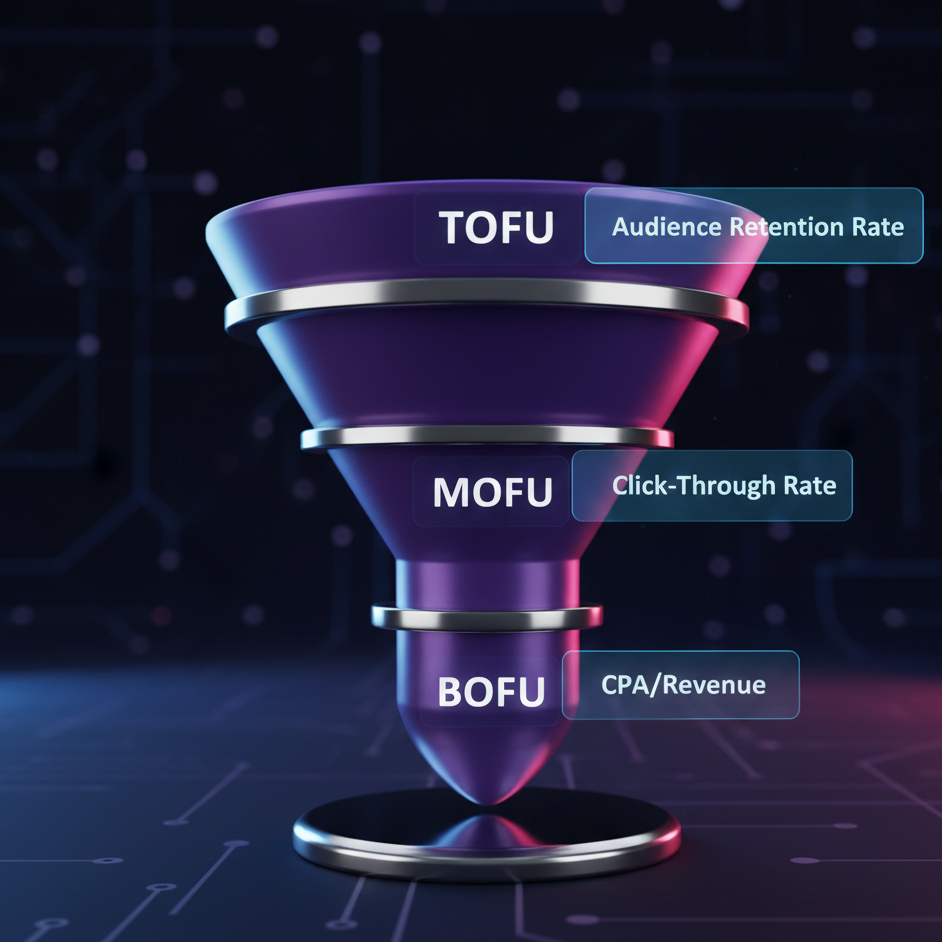
A successful measurement framework requires matching the metric to the funnel objective:
| Funnel Stage | Key ROI Metrics to Track |
| Top of Funnel (TOFU) | Audience Retention Rate (signal of message quality) |
| Middle of Funnel (MOFU) | Click-Through Rate (CTR), Form Fills |
| Bottom of Funnel (BOFU) | Cost Per Acquisition (CPA), Revenue Attribution (traced via CRM) |
By focusing on CPA and attributed revenue rather than raw views, the video production effort is rightly valued as a measurable revenue engine.
Conclusion: Making the Shift from Producer to Strategist
Enterprise video production fails due to a lack of strategic governance and procedural negligence. The strategic shift required is moving your organization’s focus from how the video looks to what the video achieves.
Decision-makers who implement a disciplined, distribution-first, and modular approach can reclaim control over their budgets and content pipeline, transforming video from a costly shiny object into a reliable, high-performing revenue driver.
Frequently Asked Questions on Enterprise Video ROI
What is the most common reason why enterprise videos fail?
The most common reason why enterprise videos fail is a lack of clear strategy and objective setting. Most projects start with tactical necessity rather than being aligned with specific, measurable business goals, such as lead generation or customer acquisition cost reduction.
How can I prevent scope creep in B2B video production?
Scope creep is best prevented during the pre-production phase by implementing a rigorous workflow and defining clear responsibilities. Use frameworks like RACI (Responsible, Accountable, Consulted, Informed) to designate a single individual who holds final decision-making power (“Accountable”), which mitigates the financial liability of budget overruns, which can reach up to 45%.
What B2B video metrics matter most, besides views?
For B2B videos, metrics that align with the sales funnel matter most. Instead of focusing on view count, prioritize Audience Retention Rate (which signals message comprehension), Click-Through Rate (CTR) on CTAs, form fills, and the ultimate measure: Cost Per Acquisition (CPA) and attributed revenue traced via CRM.
Why is pre-production so critical to video ROI?
Pre-production is critical because it solidifies the content strategy, secures stakeholder alignment (preventing costly mid-project revisions), and integrates distribution requirements (e.g., aspect ratios, captions) before shooting begins. Comprehensive planning during this stage can save an organization up to 40% of its budget by eliminating avoidable production errors and post-production bottlenecks.