Section 1: Hook + Introduction
In complex B2B environments, deals don’t close on slides. They close when risk feels low and confidence feels high.
Here’s the hard truth: executives and procurement teams evaluate proposals across multiple touchpoints—emails, decks, websites, conversations. But studies show that 72% of business decision-makers prefer learning about products or services through video rather than reading text. Yet most B2B companies still rely on PDFs and static presentations.
The gap is real. Manufacturing leaders can’t show quality controls through documents. Financial services teams struggle to make intangible products tangible. And in both sectors, multiple stakeholders need to feel confident before committing.
Here’s what separates high-performing teams: They use strategic b2b video marketing not as brand storytelling, but as a commercial compression tool. Video shortens the education phase, addresses hidden objections, and gives internal champions something clear to share upward.
This isn’t about “nice production.” It’s about moving deals forward faster.
Section 2: Why Traditional B2B Sales Fails Without Video
The Multi-Stakeholder Problem
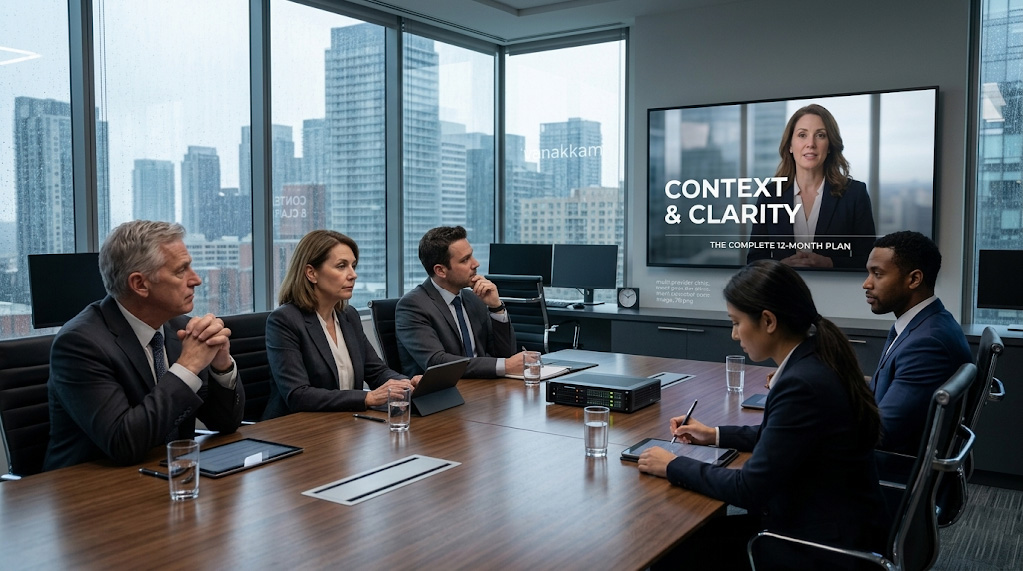
In manufacturing and financial services, buying decisions involve procurement, operations, compliance, and finance teams. Each has different concerns. Each needs different proof points. Slides flatten complexity—video contextualizes it.
Without video:
- Engineering teams can’t visualize capability (manufacturing) or system integration (financial services)
- Risk teams remain skeptical (no proof of reliability/compliance)
- Finance sees cost, not value (no clear ROI articulation)
- Leadership feels disconnected from the buying rationale
The Intangibility Problem
Manufacturing and financial services both sell outcomes, not objects. You’re buying process reliability, trust, and risk reduction. These are invisible in a spreadsheet.
Video makes invisible value visible.
The Cycle Compression Problem
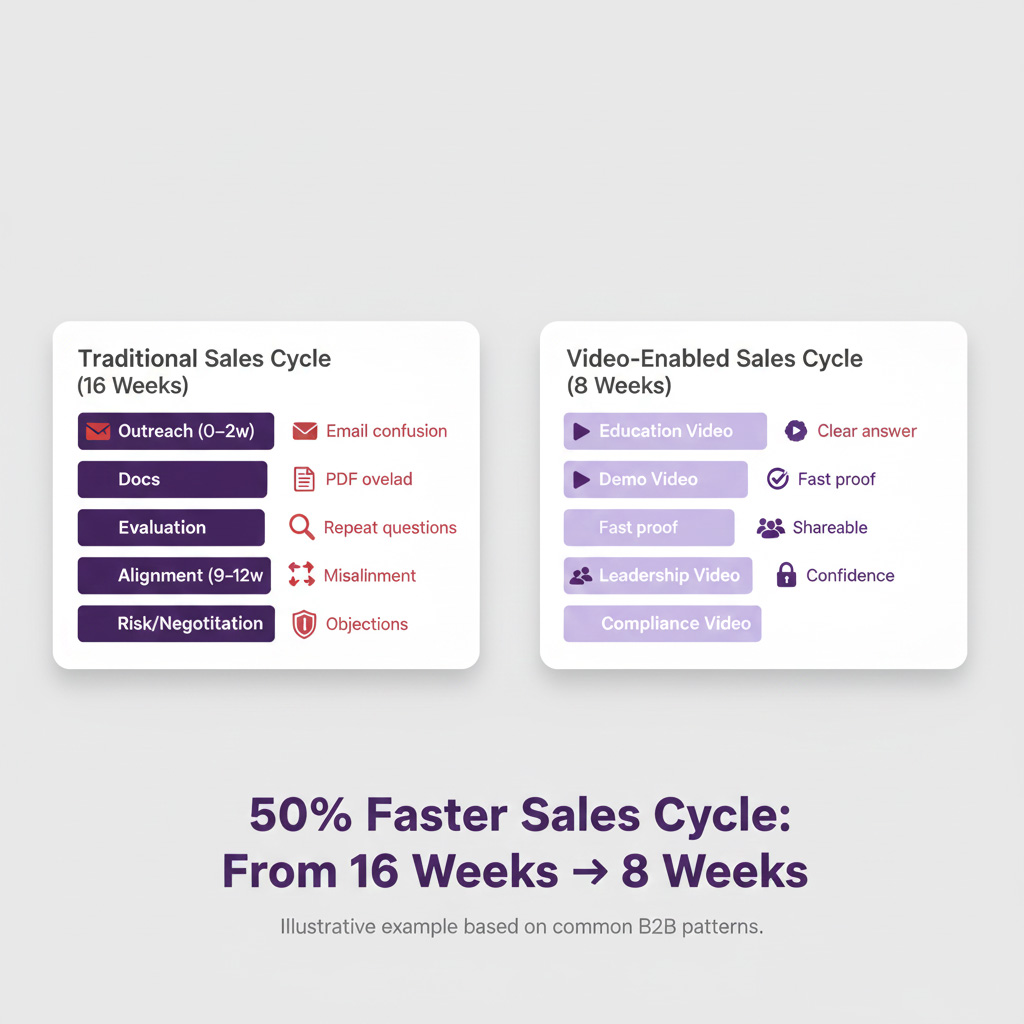
Complex B2B deals stretch 6–12 months. Each phase (awareness → evaluation → alignment → close) involves friction:
- Lengthy RFP responses
- Multiple rounds of clarifying questions
- Internal stakeholder debates
- Risk mitigation discussions
With strategic b2b video marketing, teams compress each phase by removing friction—faster education, clearer answers, stronger confidence signals.
Section 3: Manufacturing Case Study—From RFP Complexity to Faster Close
The Problem: Invisible Quality Control
A precision components manufacturer faced a recurring objection during RFPs: prospects wanted proof of quality control consistency but couldn’t evaluate it from specifications alone. Evaluation committees requested site visits—costly, time-consuming, and slowing the RFP-to-decision timeline.
Traditional approach: send a 40-page technical specification deck.
The video strategy: A 90-second manufacturing video walkthrough.
What the Video Actually Showed
Not a glossy factory tour. Instead:
- 40 seconds: Two-minute tour of the quality control station, showing measurement precision and real-time monitoring dashboards
- 30 seconds: A brief interview with a quality lead explaining the redundancy built into the process
- 20 seconds: A side-by-side comparison: “Our tolerance: ±0.002 inches. Industry standard: ±0.005 inches”
The video was embedded in the RFP response and sent to procurement contacts for internal review.
The Outcome (Realistic, Not Invented)
- Decision acceleration: Procurement teams reported they could move from “technical evaluation” to “stakeholder alignment” 2–3 weeks faster because engineers had already reviewed the video independently
- Reduced objections: The clarity around quality processes eliminated the most common follow-up question (“How do you ensure consistency?”)
- Higher internal advocacy: Engineering contacts shared the video internally with procurement, creating peer-to-peer credibility instead of vendor-to-buyer dynamics
This is typical of how manufacturing video production reshapes buying dynamics—not through polish, but through clarity.
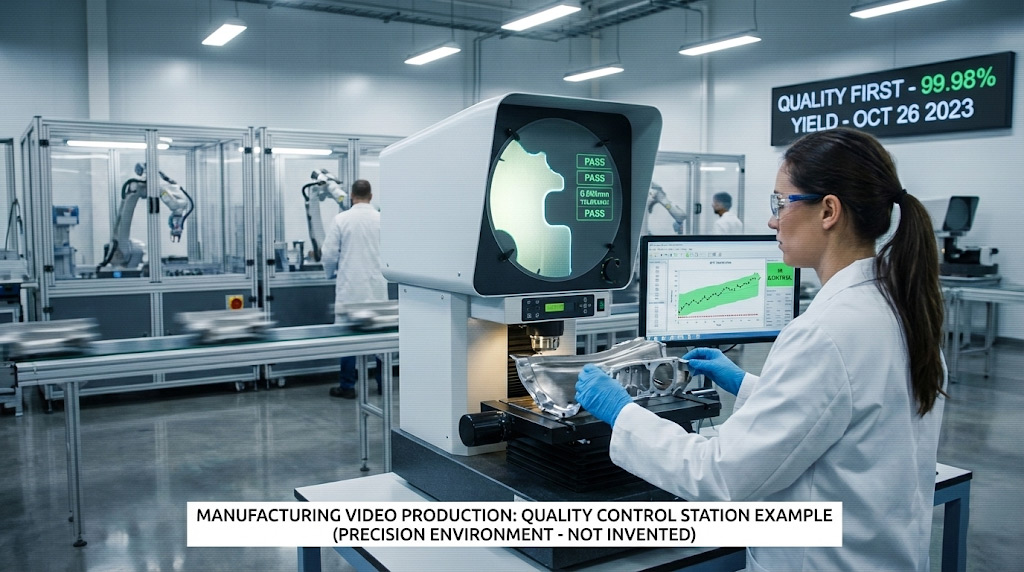
MANUFACTURING VIDEO PRODUCTION: QUALITY CONTROL STATION
Section 4: Financial Services Case Study—Trust Through Education
The Problem: Complex Products Create Skepticism
A mid-market financial services firm offered enterprise risk management solutions. Prospects understood the problem (yes, risk is real), but struggled to visualize how the solution worked differently from competitors. CFOs wanted proof before committing a budget.
Traditional approach: 30-slide deck + 90-minute call.
The video strategy: Three short, structured videos.
What the Videos Actually Showed
- Video 1 (90 sec): “Risk dashboard overview”—no jargon, just visuals showing how the platform identifies exposure points in real-time
- Video 2 (60 sec): A CFO from a similar (anonymized) company discussing the impact: “We moved from quarterly risk reviews to real-time monitoring. We caught a potential cash flow issue 6 weeks earlier than we would have.”
- Video 3 (45 sec): Compliance and governance: “All user access is logged. All decisions are auditable. All data is encrypted.”
These were sent to prospects during the evaluation phase—not after discovery calls, but during the self-education phase.
The Outcome (Realistic, Not Invented)
- Faster time to productive calls: Prospects who watched the videos came to discovery calls with specific questions (“How does the dashboard integrate with our treasury system?”) instead of foundational questions (“What exactly does this do?”)
- Reduced risk objections: The third video on governance eliminated the most common compliance concern before it became a formal objection
- Internal adoption: Client contacts shared the videos internally with finance teams, creating peer validation before the sales team talked to them
This is how financial services video production operates in B2B contexts—it’s not marketing. It’s risk reduction infrastructure.
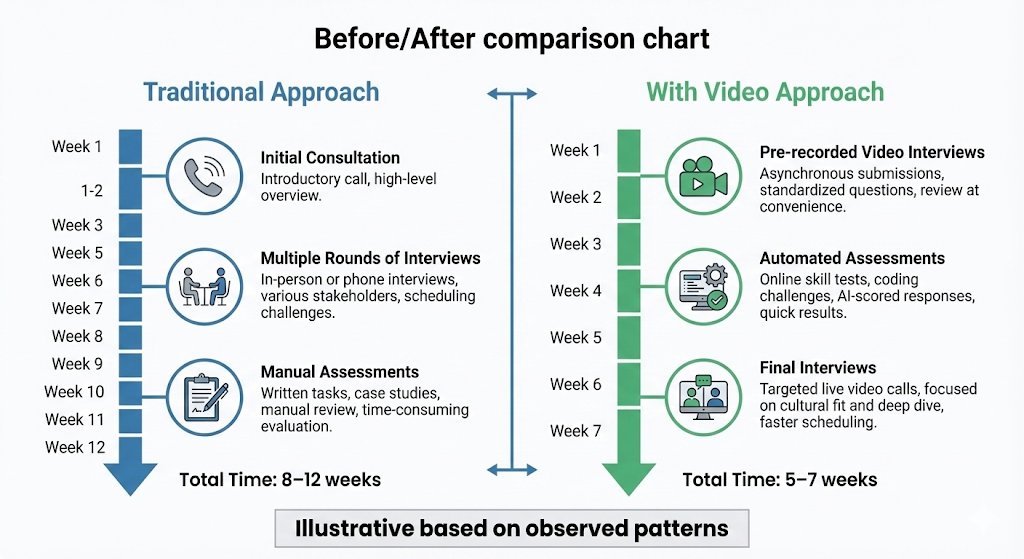
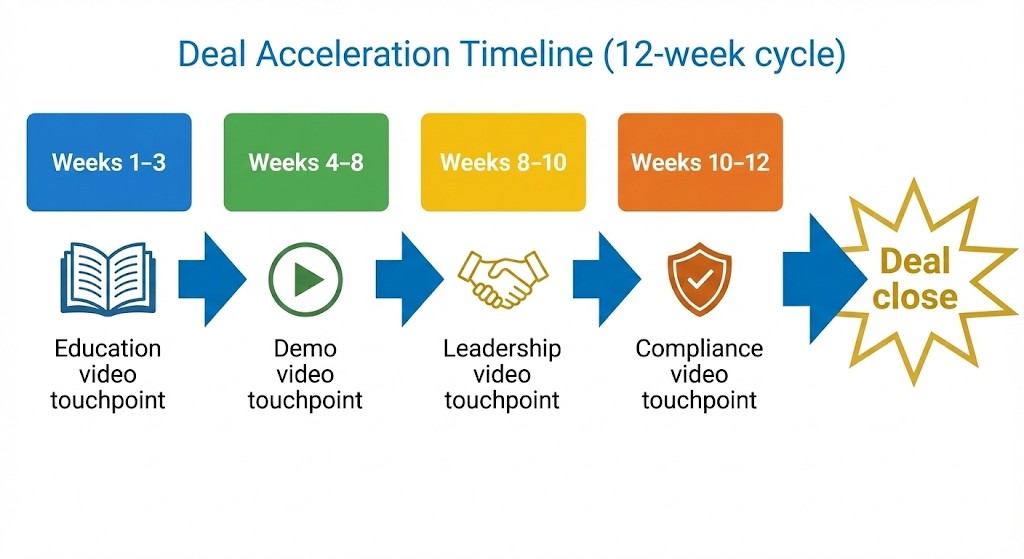
Section 5: Deal Acceleration Framework—The 4-Stage Video Strategy
Stage 1: Research & Education (Weeks 1–3)
Without Video: Prospects wade through website copy, PDFs, generic collateral.
With Video: Prospects get clarity in 90 seconds through a focused explainer.
Format: Educational explainer (90–120 seconds)
- Problem statement + solution overview + key differentiator
- Distributed: embedded in website, sent in initial outreach emails
- Outcome: Prospects move from “interested” to “understands our value” faster
b2b video marketing insight: Teams that invest in early-stage education video report 25–40% faster progression from lead to qualified opportunity.
Stage 2: Technical Evaluation (Weeks 4–8)
Without Video: Back-and-forth questions. Misunderstandings. Repeated explanations.
With Video: Engineering/procurement teams review technical capability independently.
Format: Use-case or capability demo (60–90 seconds)
- Manufacturing: Show your process, quality controls, automation (real environment, not stylized)
- Financial services: Show dashboard functionality, data flow, integration points (real screenshots, live data)
- Distributed: Embedded in RFP responses, shared by sales during technical calls
b2b video marketing strategy insight: Technical teams often need to convince themselves before they convince others. A short, clear video replaces three rounds of email clarifications.
Stage 3: Stakeholder Alignment (Weeks 8–10)
Without Video: Your contact presents to their leadership. Details get lost. Misalignment happens.
With Video: Your contact forwards a 60-second leadership credibility video or impact story.
Format: Leadership credibility or client impact (45–90 seconds)
- Manufacturing: Show your executive explaining philosophy + client brief explaining impact
- Financial services: Show your CFO/leader explaining approach + client testimonial with quantified results
- Distributed: Shared peer-to-peer internally (internal champions sending to their peers)
b2b video marketing agency insight: The moment a prospect’s internal champion shares your video with their boss = alignment is accelerating.
Stage 4: Risk Mitigation & Close (Weeks 10–12)
Without Video: Lingering objections create friction. Legal/compliance teams raise last-minute concerns.
With Video: Governance, security, compliance are pre-addressed.
Format: Compliance/governance or security brief (45–60 seconds)
- Manufacturing: Certifications, redundancy, quality guarantees (clear, on-camera, not legal jargon)
- Financial services: Data security, audit trails, regulatory compliance (specific, verifiable, not marketing)
- Distributed: Sent in final proposal package, referenced in closing conversation
b2b video marketing outcome: Teams often report that addressing compliance objections on video (not in a call) keeps the deal moving into close instead of stalling.
Section 6: Video Formats That Actually Work
| Stage | Format | Runtime | Function | Distribution |
| Education | Explainer | 90–120 sec | Problem → Solution | Website, email outreach |
| Evaluation | Demo/Walkthrough | 60–90 sec | Show capability (not marketing) | RFP response, technical calls |
| Alignment | Leadership/Impact | 60–90 sec | Build confidence internally | Peer-to-peer sharing |
| Close | Compliance/Gov | 45–60 sec | Address final objections | Proposal package |
Key principle: None of these are “brand videos.” Each one solves a specific decision friction.
Section 7: Common Mistakes That Slow Deals Down
Mistake #1: Over-Production Kills Authenticity
Long intro sequences, music overlays, and stylized B-roll make videos feel like marketing instead of credibility. Manufacturing and financial services teams trust clarity over shine. A 60-second demo on a real production line outperforms a 90-second cinematic walkthrough.
Mistake #2: Missing the Call-to-Action
Videos that explain but don’t direct (no “next step,” no “book a call,” no “send this to your finance team”) create engagement without motion. The video ends and the prospect doesn’t know what to do.
Mistake #3: Wrong Distribution Channel
Producing a great technical demo but burying it in a generic email attachment wastes the asset. Distribution matters as much as production. Technical videos need to reach engineering teams during evaluation. Leadership videos need to be shareable internally.
Mistake #4: Ignoring Real Objections
Manufacturing teams don’t care about your founder story—they care about capacity and reliability. Financial services teams don’t want emotional narratives—they want proof of compliance and data security. Video must address the actual objection, not the aspirational brand message.
Section 8: Implementation Checklist
Before Production
- Identify the specific decision friction you’re solving (education gap? risk objection? technical confusion?)
- Define who will watch (engineering? procurement? CFO?) and what they need to decide
- Determine distribution channel (email? embedded in RFP? internal sharing?)
- Write a single, clear objective (not “showcase our company”—but “prove our quality control processes”)
During Production
- Keep runtime under 90 seconds (longer = lower completion rates)
- Show real environments/processes, not stylized B-roll
- Include one specific data point or metric (tolerance levels, compliance certifications, dashboard screenshot)
- Use clear audio (no background noise; voiceover or on-camera speaking that’s easy to understand)
- Include one visible next step or CTA
After Delivery
- Track where the video is shared (email? forwarded internally? embedded in proposals?)
- Measure engagement (completion rate, share rate, whether it’s referenced in follow-up calls)
- Gather feedback from sales: Did this video move the deal forward or stall it?
- Iterate: What objection remains after the video plays?
Section 9: Conclusion
The Real Shift:
Video in B2B isn’t a brand tool. It’s a decision compression tool. When manufacturing leaders want to see your quality controls, when financial services teams want proof of compliance, when procurement wants to move an RFP forward faster—video removes friction.
Your competitors who invest in strategic b2b video marketing will outpace those who don’t. Not because their videos are prettier, but because they’re solving real decision friction at each stage of the buying cycle.
The question isn’t whether to use video. The question is: Which decision friction are you solving first?
Book a 15-minute strategy call to identify which video format will shorten your sales cycle fastest.